Saturday, 29 August 2015

Water


Thunder rolls, breaking and exploding through the thick grey clouds. As the torrential downpour ceases, young boys kick a football around on the grass between the houses and lopsided cooking sheds that lie underneath hanging electrical wires. The young bodies throw themselves towards the ball, brown limbs and flashes of white soles as they run, fixated. A goal is scored and they whoop, one cartwheeling, another attempting a one-handed handstand, showing off for invisible spectators. The game ceases momentarily as the ball flies over a hedge and against the mosquito-netted veranda of the town pharmacist. A lithe body runs through the trees, throws the ball back and the game instantly continues. Fat, lethargic rain drops slowly slide off the leaves of banana trees, and sleeping bats hide from the rain under the fronds of the coconut tree.


I walk down the main street in Buka, beads of sweat wearily rolling down my spine. The market on my left hand side, it’s high, woven dome sheltering women from the heat. Piles of mango and coconut amongst the elongated eggplants, yellow tomatoes, tiny capsicum, and endless piles of choko, ibica, cabbage and pumpkin tips, green leaves spilling out from tightly wound vines onto the abraded concrete floor. To my left, the bright signage of Chinese-owned trade stores and men taking refuge from the sun under the narrow awnings, exhaling exhaustion and spitting the juice of the buai on to the dust. Viscous, crimson marks on the white coral road. Further on, the boat stop, full of banana boats jostling for a position in the small bay. Some are loaded with rice and beer to take to the mainland, some full of school children, so packed that six-year-olds perch on the bow like minute figureheads. Skippers converse with no words; a raised eyebrow, a tilt of the head, a brief hand gesture, and the chaos is transformed in to a complex ballet of churning motors and imperceptible motions. 

...

The temperature has dropped and the clouds have been hanging low for weeks. The hot, thick, searingly blue heat that I love has turned in to a grey, humid, heavy lethargy. The cooler weather has brought the rarely-heard song of the cicada out of the fractured and thirsty ground, a sound that makes my heart ache for New Zealand. We haven’t had a proper rain in a long time. People dig wells in their back yard in the anxious struggle to find water, while the newspaper stories outline failed crops, uncommonly cold frosts, schools having to shut early to allow children to go home to search for water. Brightly-coloured buckets stand guard around the house, collecting the last few drops of water that fall from the gutters high above. I sit and watch the droplets painstakingly hang on to the rusting aluminium and finally, slowly, fall in to the buckets. The air smells sweet and as I breathe in the rainforest and smoking rubbish and the ancient reef and damp grass, I listen to the cicada and think of the brackish wind that means home, of standing atop the hills at Makara, of feeling like I could be the only person left in this world.


Sunday, 23 August 2015

{homecoming}


I fly through the air at 4000km per hour, the red earth I had returned to hurtling below, eucalyptus dotting the ancient earth. Tired, dried out husks bearing the weight of the world. I am leaving again, but now I don’t have anything to return to. She had been a constant. She had sat in her armchair, fingers embraced by golden rings; a colour for the ages, so she said; she had sat amongst the trees which bowed to the river and the sun, boughs of green and then grey and then green again, seasons changing and still she sat amongst her gold. Then she moved and again she sat, this time surrounded by three small walls and one of roses, sitting amongst papers and that which she loved; and then she lay down, and she didn’t sit up again. I flew to her, over the banana trees and coconut, over the deep green of the sea, and then over that red earth and over the dry eucalyptus. She lay amongst us and we didn’t leave her; we whispered and laughed and cried and we massaged her feet and stroked back her hair and we kissed her forehead and we said things we felt guilty for, as she lay with her eyes hooded and mouth agape, each breath accompanied with a deep rasp, a clenching of life in her fists, a refusal to go without a fight. I sat and I whispered to her; “I love you, I have been so shaped by you, I didn’t even know you, but I knew you were in me.” As I watched her cheeks sink and her chest fall with each moan, I couldn’t help but think of the dog we’d had amongst the bananas and coconuts, whose chest had fallen and eyes had faded in the same way. But that dog had died quickly, with no one to mourn as the edge of the spade fell from the hands of the villager. Perhaps it had been surprised at this final betrayal. Its bones and the skin that held them together had ceased to shudder, and as I watched her eyes slowly lose focus and forget me, her fingers with their golden rings loosen their grip on mine, I absurdly thought of the fall of the spade and that dog with the kind eyes and the heaviness in my heart. And then she was gone. Her papers and her room and the pungent sweat and incense and smell of sickness ceased, replaced with stripped sheets and second hand donations and the unsettling feeling that I hadn’t cried enough. Yet I loved her, and had been shaped by her. So now I fly over the red earth and the eucalyptus, this land I never really claimed but always felt a part of, unable to brush the ochre dust off of my palms, relishing the dry, acrid taste of the bush on my tongue. 

Tuesday, 21 July 2015

Five Reasons Everyone Should Move to Another Place in Their 20s

At the tender age of 23, I have moved away from ‘home’ twice - first from Auckland to Wellington to go to university, and then to Bougainville, to pursue my ‘dream job’. I stayed in Wellington for four years, and it was in Wellington that I became an adult, so to speak. I fell in love; with guys, with development studies, with the city, with new friends. I was able to reinvent myself in a way that I had yearned for all throughout high school; to leave behind the people who had known me all through my awkward teenage years and had me labelled, to pursue my passions without being compared to a version of me I had long outgrown. While I still treasured the old friendships that survived the geographical distance, and missed my family like crazy, it was in Wellington that I tried, failed, learned, and discovered who I really wanted to be.

But then I got itchy. After four years of university, of living in the same suburb, of eating at the same burger joints and drinking the same (admittedly amazing) coffee, I wanted a change. I found myself making an even bigger move; to the post-conflict, ‘under-developed’ islands of Bougainville. This move has by far been one of the biggest challenges of my life so far. In all honesty, I have found it lonely, and difficult, and painful at times. But while I’ve been here, I’ve thought a lot about where home is; where do I belong, where do I want to settle down, and how can I be the best possible version of me? I’ve come to the conclusion that moving away, geographically, can be one of the most empowering things a 20-something-year-old can do. Of course, some people in their 20s have responsibilities that hold them to a particular place like children, or a mortgage. I am also aware that travel can be a huge privilege in terms of money unless, like me, you move somewhere through a volunteer position, or with a job to go to. But if you are able to, I highly recommend challenging yourself and leaving your comfort zone for the following five reasons.

1. Self-discovery

“I am not the same, having seen the moon shine on the other side of the world.” – Mary Anne Radmacher
There is nothing quite like walking down the street, or sitting on a beach in a completely new place, and realising that people don’t know who you are, where you’re from, who your parents are…and they probably couldn’t care less. You now have a new blank canvas on which to draw a picture of yourself. Whatever you want to be and do, you now have all the chances to explore and create without any influences from people you grew up with. 

At first, this can be a lonely experience. When I first moved away from Auckland, I called my mum every night sobbing and wanting to come home. But little by little I discovered that ‘alone’ didn’t necessarily always have to mean ‘lonely’ and that actually, being alone is when you are able to really get to know yourself best. In a new place, you can build a whole new ecosystem around you — be it new friends, a new job, a new flat, new flatmates. You get to really follow your heart and your instinct and, having now seen how huge the world is around you, you can decide on the place you want to occupy within it.

2. Independence

“The world is a book, and those who do not travel read only one page.” – Saint Augustine
When we first move away from our parents, we relish our newfound independence and think we’ve made it; in the wise words of one of my friends, we “learn how to adult”. But every time you move away, whether it be out of home, or away from your support system of friends, we gain a little more self-reliance. 

Being independent takes courage to face your fears and face the unfamiliar. When you move to a new place, the unfamiliarity can be terrifying and incredibly debilitating. But when you practice courage, overcoming your fears becomes easier. Soon you will be discovering the new streets alone, talking to new people, learning to a new public transport system and ordering foreign food in a new language. When you don’t have family nearby to help or familiarity to fall back on, but still succeed and come out stronger, you get to say things like “I CAN DO ANYTHING!!” (I say this as a mantra quite often. Sorry/not sorry). 

3. Relationships

“Nobody can discover the world for somebody else. Only when we discover it for ourselves does it become common ground and a common bond and we cease to be alone.” – Wendell Berry
While this is third on my list, I honestly think it is the most incredible and important aspect of life itself. But I think that in order to have healthy and life-giving relationships, you have to learn to love yourself first; hence the number three.

With each friend who didn’t grow up in the same place as you, with a similar socioeconomic background, you can learn so much and develop a much more open mind. This is relevant in both overseas and within New Zealand – until I moved to Wellington, the majority of my friends were Pākehā, middle-class and straight. Now, I have a beautiful and diverse group of friends who have supported me, opened my eyes to different experiences and helped me grow into who I am. Moving to another country is even more of a learning-curve regarding relationships. It is your friends in your new home country that will be the ones to teach you how to cook with local ingredients, what is a socially acceptable way to interact with other people, or where the hidden local gems are that the tourists don’t know about. And it is these new friends who will open your eyes to how the world works outside of yourself, and help you realise the common bond we share with all living beings; not just our fellow country-people.

4. Adventure

“Life is either a daring adventure or nothing.” – Helen Keller
You likely have a social pattern with your old circle of friends back home: Friday dinners in a certain suburb, drinks at your favorite bar, weekend trips to the markets, a recipe for every social gathering developed over years of interactions. These routines can be wonderful, and I miss them so much, but are they really stretching and exciting you?

I remember my first breath of Bougainvillean air as I stepped out of the airplane; sweet, wet, hot air, full of rainforest and smoke and dusty smells. For me, that is the smell of adventure. To live adventurously is to look every opportunity in the eye and say yes. This time last year, I couldn’t say that I had been trawling for yellowfin tuna, snorkelling with clownfish and giant clams, seen a huge marlin soar out of the water, or kayaked in to the sunset in the New Guinea Islands. But now I have, and I am so grateful for those opportunities. Adventure doesn’t have to mean running away from your friends and family to a different place. But it definitely means taking stock of your life, and making a decision to challenge yourself.

5. Home

"I long, as does every human being, to be at home wherever I find myself." - Maya Angelou 
When I was growing up in Auckland, I was always wishing I was everywhere else, but now that I live far away, I look forward to my time there. I love spending time with my family, catching up with old friends, and just enjoying the place for what it is. Someday, I might return home (except I’m not sure where that is anymore) and put down roots, but for now, there is too much to discover on thie breath-taking planet of ours. They say home is where the heart is; I say the heart can be in many different places. Home is subjective concept, constantly changing as you change yourself. Being away from everything you know and love can have such a clarifying effect on your thoughts and values. And who knows – perhaps once you leave you’ll realise where home is for you after all, wherever that may be.


This post was written with inspiration from the following articles:


Wednesday, 8 July 2015

simplicity | complicity

People tell me that I must enjoy living in Bougainville, because "life must be so much simpler." I find this view interesting; so many people from ‘highly developed’ (I use this word with a full awareness of the shortfalls and assumptions that accompany the word developed) societies seem to romanticise the lives of those who live in subsistence-based societies. Our understanding of the wider Pacific region comes mainly from tourism brochures, in which happy brown people serve delicious food to tanned white people lying on a picture-perfect beach, or from the news, which only shows stories from the Pacific in times of natural disaster, such as Cyclone Pam, or political instability, as with Fiji and Bougainville. One could go so far as to say there is an element of paternalism and condescension in this view of Pacific Islanders as a simple people, with few cares in the world, who grow food and occasionally instigate coup d’etat which never affect our own lives in quiet New Zealand. And so, having grown up with disposable incomes in technology-saturated societies, being desperate to shed the complications of always being busy, always consuming, always communicating, we look at the wider Pacific region and think “life must be so much simpler”.

I do think that life in Bougainville can be simpler; people are laid back and friendly, time goes slowly and yes, if you have land, you can most likely live off it. There is nothing malicious in thinking such things. But to romanticise the lifestyle in places like Bougainville doesn't do justice to the resilience of its people. Bougainville has come out of a 10 year war with Papua New Guinea, fuelled by the clash between neoliberalism and customary traditions, a people born of the land and a mine that scarred the land. During this conflict, PNG blockaded Bougainville, denying Bougainvilleans access to any goods, services or freedom of movement. Women gave birth to children without access to maternal healthcare, children grew up in the bush without education, men fought and killed and died in the tens of thousands. New Zealand, in fact, was the country which successfully organised and hosted peace negotiations between all parties involved. But it took 10 years of horror before we did anything at all.

15 years on, many people living in rural areas still struggle to access education and healthcare of a high standard, and to attain employment opportunities outside of working their land or running a trade shop. Arawa, the second largest town in Bougainville, has not had access to power for the last four months. The river from which Arawa town sources its water runs thick with heavy metals leached from mining in the mountains and is dangerous to drink. Buka itself lacks any fresh water source apart from rain, and is a dry place. In the past month, I have had my water tank refilled with bore water, rendering my tap water unsafe to drink; a problem many people in Buka encounter and a likely source of gastrointestinal problems. A large proportion of Bougainvilleans don’t have access to radio coverage, mobile reception, or newspapers. Their knowledge of current affairs comes from market gossip and campaigning politicians, and local government structures often fail to give any of these people a voice in the political system. Women lack proper access to reproductive health services and men often die drinking potent home brew.

I do not want to paint a grim picture of Bougainville. It is truly one of the most beautiful, friendly, wonderful places I have ever visited. White sand beaches fringe the turquoise seas which teem with colourful and plentiful marine life, lush green palms and bananas contrast with the blue sky. Bougainvilleans will open their arms to you and gift you with the most wonderful relationships; this is a land of hope and determination and reconciliation. But I think it is important for people from New Zealand to think about their privilege, and their complicity in the political and economic structures that render New Zealand seventh and Papua New Guinea (including Bougainville) 157th on the HDI ( Human Development Index) scale (note: both Papua New Guinea and New Zealand are not included in the Inequality-adjusted HDI rankings from 2013). 

Bougainville’s war wasn’t an isolated event founded purely in ethnic differences. It was the product of a century of colonialism, land-swapping and land-grabbing between Germany, Britain, Japan and Australia. Its roots are deeply intertwined in the growth of neoliberalism and extractive industries during the era of PNG independence. Since independence, rapid urbanisation led to huge growth in Port Moresby, resulting in increased loss of village culture and an increase in crime. This accompanied a boom in extractive industries; 78% of PNG’s exports are derived from natural resources, oil and gas accounts for 23% of government revenue and GDP growth has been averaging about 7% annually. Despite living such wealthy soil, 75% of Papua New Guineans still live subsistence lifestyles and injustice and inequality are rife. 

While New Zealand doesn’t have a direct colonial history in Papua New Guinea, it is implicated in the growth of neoliberalism and consumption of non-renewable resources, and the local and global consequences of such ideologies. Many authors have argued for the link between neoliberalism and inequality, and consequently the link between inequality and violence. In the 1980s, under Labour, New Zealand was one of the first countries in the world to leap eagerly forth and voluntarily impose neoliberal reforms in its domestic market under ‘Rogernomics’. The current National government is equally as eager to privatise education, healthcare and assets, and all the while, income inequality in New Zealand has risen to an all-time high. In recent weeks, the National government has released a climate change target for the (New Zealand’s Intended Nationally Determined Contribution (INDC)) of of 11% emissions reduction below 1990 levels (30% below 2005 levels) by 2030. There were 17,000 submissions to the recent government consultation for New Zealand’s INDC. Of submitters who recommended a target, 99% recommended that it be either 40% below 1990 levels or higher, or zero carbon emissions by 2050. The National government has shown that it is unwilling to listen to New Zealanders and is unwilling to lead in taking real climate action. 

While New Zealand continues to pursue a neoliberal ideology of economic development and fails to take serious action on climate change and emissions reduction, how can PNG, a country that is highly dependent on bilateral aid, hope to decrease inequality and create a more sustainable economy? Aid is heavily political, and heavily influential. New Zealand, amongst others, is a major aid donor to PNG. In 2013, NZ gave a total of $35.8 million NZD to PNG. Along with this money comes advisors, requirements, evaluation and monitoring. PNG does not just spend aid money as it likes; it spends aid money in a very nuanced and diplomatic way, satisfying the political and economic motives of donor countries. In this way, through the way our government manages aid and bilateral relationships, New Zealanders are complicit in the politics and economics that affect places like Bougainville and conflicts such as that over the Panguna mine.

Within all this, we as New Zealanders have a political voice, we have the privilege of education and literacy, and we can hold our government accountable. We must remember that government decisions do not just affect New Zealand; they affect those that receive politically-laden aid money from the NZ Aid Programme. We must ask ourselves; what are they doing to contribute to making the world a more equitable and kind place? How are we working towards changing the systems of oppression and inequality that exist both in New Zealand and in Bougainville? Are we active in our local government processes? Do we live a life that is heavily dependent on non-renewable resources such as oil and gas? Do we buy products that are produced sustainably? I realise that a lot of these options can be a middle-class privilege, for example, buying fair trade products which cost more than the standard product. But there are many things we can do that are within our means; take the bus, become a member of a political party you truly believe will make a difference, lobby the government to implement more incentives to develop renewable energy sources. I know that when we ask ourselves what kind of difference we are making, it is often overwhelming. I am working in Bougainville, in the development sector, and more often than not I feel like I am not making much of a difference at all. But I think that whatever your path, it is incredibly important to live your life in a way that is self-aware and analytical of the choices you make, and the impact of these choices on other people and the environment.

So, yes, life can be simpler in Bougainville. This is true. Life can be plentiful and beautiful and fulfilling. But it can also be very hard and lack some of the most basic services. Be aware of your privilege and of what Bougainvilleans have spent the past 15 years working towards. We must ask ourselves; how do I as a New Zealander contribute to the political and social systems that so heavily impact people in other parts of the world, and how can I make that contribution a positive one?

A child in the South Bougainville mountain village of Singkondo. Singkondo is two and a half hours away from the closest urban centre, Arawa. It does not have access to power or radio coverage, but it does have mobile phone coverage.

Monday, 22 June 2015

[a long-overdue update]

Happy June, everyone! I’m sorry it’s been so long since I’ve written; it’s been such a busy month! Here is a mammoth blog post to sum up the past two months…

Buka has been full of activity for the 2015 ABG election which has been running since May and only just wrapped up. This 2015 election is incredibly important; the referendum for Bougainvillean independence from PNG is due to be held before 2020 and so the winner of the presidency, incumbent John Momis, will have a huge influence on the future of Bougainville. In the meantime, I have been working on some ABG research that is being undertaken by the Centres for Social and Creative Media (CSCM, University of Goroka). My counterpart Michael, another staff member from the ABG called Moses, and I are working alongside researchers from CSCM to coordinate the project. The research seeks to increase understanding of the information and communication landscape in Bougainville, including current knowledge and misconceptions, regarding the Bougainville Peace Agreement (BPA) and referendum. Hopefully, the outcomes of the research will directly inform the development of communication materials in regards to the referendum.

In mid-May, we held a five-day research workshop that included 16 field researchers from all around Bougainville. Following this workshop, the field researchers were sent to collect data from every COE (local government body) in Bougainville, while Moses, the CSCM team and I travelled around Bougainville assisting field researchers and gathering completed data. Not only was this an amazing experience in which I learned a lot about Bougainville and research is this very unique context, but it was also so much fun! We travelled with Llane and Cythia, two Bougainvilleans working for CSCM, and they provided constant entertainment; we had singalong sessions in the car while driving down to Arawa, spent the afternoon swimming in the cool water of the Bovo River, sung songs with Llane’s family from Kieta on a Saturday night and ate a lot of cake. It was really lovely to be working alongside young Bougainvillean women, and also to work more closely with Moses. 


The Bougainville Audience Research Study field research team.

Young boys playing in the Bovo River, Arawa.

During our first few days coordinating the research, Cynthia, Moses and I drove through Panguna and over to Bana, which is in South Bougainville. The journey through Panguna was pretty incredible. Until a few years ago, not many non-Bougainvilleans had been to Panguna since the Crisis. An armed road block at Morgan Junction was set up by the Bougainville Revolutionary Army (BRA) during the Crisis to control entry to the mine. Even now Australians are rarely allowed through; New Zealanders receive a much friendlier response, but the likelihood of passing through Morgan Junction depends largely on who is manning the road block that day, and who you are travelling with. Sitting in the back of the Land Cruiser with Cynthia, I broke a sweat as we approached the road block. What if we were turned back, just because of me? What if my blatant foreign-ness meant I had to return to Buka and leave the research behind? Despite my active imagination, I needn’t have worried; our driver, being familiar and likely related to many BRA families, was waved through without a fuss.

The site of the copper mine which sparked the 10-year conflict in Bougainville, Panguna is high up in the mountains and is a vastly different environment than Buka. The clouds graze the treetops of the bush, which gets thicker and more impenetrable the higher you climb. Panguna mine itself is breath-taking. Once the largest open-cast copper mine in the world, injecting billions of dollars in to the PNG economy and in to the pockets of its Australian owners, it now sits in silence, slowly being reclaimed by the bush. Mining machinery lies in disrepair, gathering rust. Many parts were collected by combatants during the crisis; when PNG imposed a blockade on Bougainville in retaliation to the protests around the mine and desire for Bougainvillean independence, Bougainvilleans no longer had access to medicine, machinery, petrol, clothes or any foreign goods. Having fled in to the bush, away from the PNG defence force, many Bougainvillean villages devised genius ways of surviving. They created DIY hydro-power plants using local rivers and materials sourced from the mine; they created generators out of mining machinery engines; they made coconut oil and ran their cars off it; they used coconut water in IV lines and revived the art of bush medicine. Now, many of the landowners that originally lost their land to the mine and saw the subsequent environmental degradation are once again living on the land; in old miners’ accommodation and in traditional bush material houses looking over the huge hole in the earth. Two hundred meters either side of the huge Jaba River, the vegetation has died off due to leaked and toxic mining tailings. Amongst the tailings, without any protective equipment, women and men bend over and sift through sediment to extract what precious stones remain in their land. Bougainvilleans take the idea of the ‘number 8 wire mentality’ to a whole new level. 

Me and Moses, with Panguna mine in the background.
A liklik pikinini in Maletai, Central Bougainville.

As we drove west of Panguna, we entered Bana. We stayed in two villages; Mavele, a village just off the main road through the district, and Singkondo, a mountain village which is much more remote. Mavele is the village of Cynthia’s father’s family to which she had only been once before. When we arrived, the people in the village organised a welcome ceremony to allow us on to the land and to welcome Cynthia back to the place of her ancestors. We were made clean by water sprayed over us and each given gifts; I was given a beautiful necklace made from tiny polished shells, which traditionally were used as a currency in the Solomons and Bougainville. Now, people usually trade with the PNG Kina, but this shell money is still used in ceremonies such as the exchange of the bride price. Bana is, like most of Bougainville, matrilineal, and Cynthia’s aunt Grace is the chief of Mavele. She is a hilarious woman and I spent all afternoon ‘storying’ with her and laughing. We were surrounding by a gaggle of young children listening to us and after a while Grace asked me to talk to them all about New Zealand (in my limited Tok Pisin). I was showing them photos of Wellington on my phone and they were all impressed by the huge buildings and the harbour, but the photo that got the most uproar and wolf whistling out of them was when I showed them a picture of man blong mi, Daniel; they all thought he was VERY handsome!

Following my crazy weeks of work and research, I flew out of Bougainville to New Britain, one of the New Guinea Islands, for a wee holiday and to meet Dan, who was flying in from New Zealand. I flew in to the capital, Kokopo, around midday. Given that Dan wasn’t to arrive for another five hours, I was FORCED buy some lunch at a nearby resort, which I ate while lounging by the pool. After a week of sleeping in bush huts and eating two minute noodles and rice while researching, I was in dire need of a bit of luxury. Some people may call this “white development worker privilege”; I do find it difficult to reconcile myself to the fact that I am able to live in the relative poverty of an average Bougainvillean and then fly out to a resort to make myself feel better. Nonetheless, it was amazing to finally relax and soak up some sun. Once Dan arrived with very little fanfare (it would have been incredibly inappropriate for me as a woman to hug, let alone kiss, a man in public, so I settled for an adoring gaze) we made our way to our accommodation for the night, at the house of another VSA volunteer and a university friend of mine, Laura.

Dan and I spent a fantastic week exploring Kokopo and spending time with other volunteers. I did get especially excited to find out that the shops had a lot of food I’m unable to buy in Buka, and my bag was distinctly heavier on the flight home due to my cravings for pasta and mustard, coffee and tea. We also travelled about an hour out of Kokopo to a place called Kabaira and stayed in a bungalow on the beach for a few nights. Tucked away amid thick banana groves and slender coconut trees gently swaying in the wind, we lounged, swam, snorkelled and kayaked for four glorious days. There was no real beach to speak of, but right by the shore there was a gorgeous coral reef, teeming with brightly coloured fish. Wispy angel fish, curious clown fish and a grim looking eel, besides innumerable other species, flitted through the other-worldly coral. Having lived in the region since pre-independence days, the Australian-PNG family who ran the guest house regaled us with the histories, myths and politics of the area.


Dan and I on our way to Kabaira, East New Britain.
A cultural performance group from Nissan Island, with the duk-duk, of the Tolai people.
Dan has come back to Buka with me for the next two weeks, and while I have to work (sometimes), we will also do a bit of travelling around Bougainville. We have spent some time exploring Buka and its surrounding islands, and next week we will travel down to Arawa and Kieta. Last week we spent the day watching the celebrations for the inauguration. A lot of different groups from different clans around Bougainville performed their traditional dances and there were quite a few (live) pigs offered to the new members of parliament as gifts; quite a valuable gift here, but one that I do cringe to see trussed up by its trotters while waiting for the ceremony to be over so it can be slaughtered. The colours and traditional dress donned by the dancers were pretty incredible; my favourite is the duk-duk from Nissan Island and the New Guinea Islands. This costume involves a person being covered in large green leaves, topped with yellow leaves, until he/she looks a lot like a giant pompom with legs; on top of this leafy body is a tall, conical head topped with feathers and flowers. The duk-duk is a representation of a particular spirit or ancestor of the Nissan people, and the dance it does while flanked by warriors can tell all sorts of stories. It was a beautiful, if not somewhat unusual, sight to see!

Having a  holiday has reminded me how much I love Bougainville, and what a fascinating place PNG is. It’s also made me incredibly homesick though; I have a lot more time to think about home and although I’m amazed that four months has passed already, I’m very aware that I still have six months to go before I can see my beautiful New Zealand again. I suppose that is the double-edged sword of such adventure; to explore the world one must leave home behind. 

Wednesday, 29 April 2015

Welcome to the Bureau of Media and Communications

Hello, everyone! 


I’ve been fielding a question from a few people about my work, and I realised that I haven’t really told anyone what it is I’m doing here in Bougainville in any depth. So I decided to write a post about my office and the projects we’re currently working on. Sorry if this is boring to anyone who is completely uninterested in archives, but hey, at least my Mum will appreciate it.

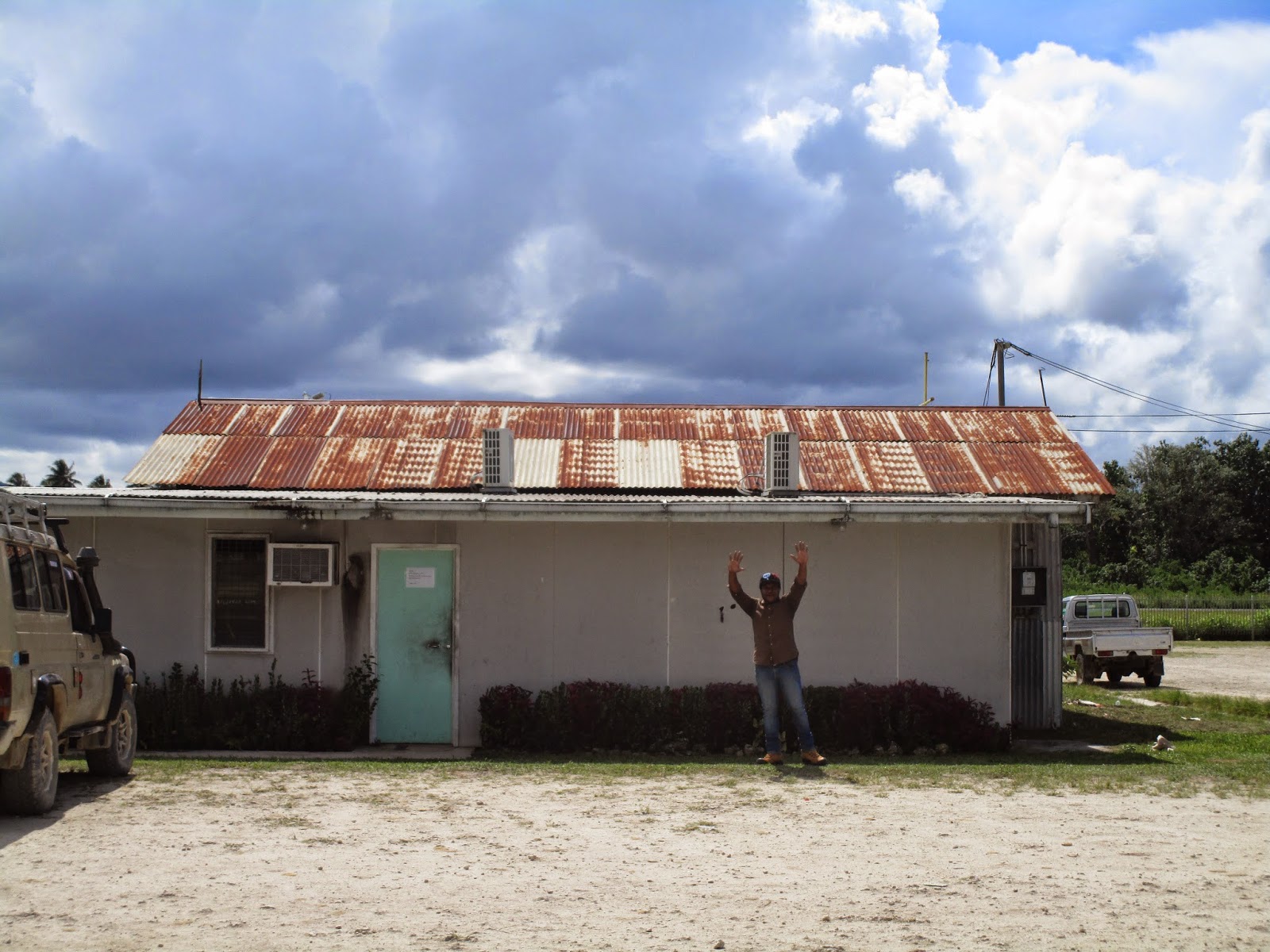
The ABG Archives, where I work, is a part of the Bureau of Media and Communication (Media and Comms), which is an Autonomous Bougainville Government (ABG) bureau. Our office is 100m from the airport (which is little more than a shed) in a complex of low-lying buildings. Media and Comms has a focus on print, radio and web communication, as well as being the centre for the ABG Archives and the Bougainville Arts Federation, which is relatively new project that Annabel, another VSA volunteer, has been working on. Media and Comms produces the Bougainville Bulletin, an ABG newspaper published every two months and distributed throughout Bougainville by some particularly dedicated staff who take it in to even the most remote communities. We also run Radio Ples Lain, a mobile (as in moving, not cellular) radio station which is dedicated to bringing ABG news to all of Bougainville by broadcasting in the field. The Radio Ples Lain truck is able to broadcast its programmes up to 50km away, depending on the geography of the area, thereby communicating information to communities which do not receive radio or mobile coverage. The Radio Ples Lain staff also work with NBC (the PNG National Broadcasting Corporation) to provide Bougainville-based content for the NBC station. Media and Comms is also currently building the ABG website and Tanya, our incredibly talented website and audio-visual staff member, is responsible for sharing media online.

Ben, Radio Ples Lain presenter, outside the Media and Comms office.
 The ABG Archives office is a 4x8 metre room to the rear of the Media and Comms office, which houses three walls of floor-to-ceiling shelving for archived files and three desks (one of which is piled one metre high with extra files). My counterpart, Michael, and I work here. The purpose of the ABG Archives programme is to collect, manage and archive records created and received by the ABG, and to provide access to records and archives for ABG staff. My role as Records Management and Archives Assistant is to support Michael in his role as Archives Officer, to assist with the digitisation project and the promotion of the ABG divisional file classification, and to train ABG staff in records management procedures. The ABG Archives contains around 4000 records, mainly from 1990 – 2005, and includes highly important records from throughout the Bougainville Peace Process which are of significant cultural and historical value to Bougainville. In a somewhat sub-standard shed next to the Media and Comms office, thousands more old files await processing by Archives. The capacity to do so is extremely low, given that we lack the storage space and (wo)man power to efficiently process records. We are also slowly embarking upon a digitisation project. Again, until the ABG Archives Policy is approved by the government, we lack the finances and resources to scan archives efficiently and effectively.

In addition to our role in Archives, Michael and I are working with another person in our office, Moses, to coordinate some audience research commissioned by our office and carried out by the University of Goroka’s Centre for Social and Creative Media. The research will look in to the information and communication landscape in Bougainville including current knowledge, attitudes, misconceptions, risk perceptions and beliefs regarding the Bougainville Peace Agreement (BPA) and referendum among key audience groups. Our role is limited to organising field researchers and assisting with logistical preparations, but it is pretty fantastic to be able to assist with such an important project. Perhaps as much as 90% of Bougainvilleans have access to mobile coverage, but access to more traditional new sources such as radio and newspapers is incredibly limited in rural areas. The communication landscape is fascinating in this respect; social media in PNG is booming, but the online presence of government bodies and other major organisations is limited. In this sense, as far as I have observed, there is a huge gap between the primary communication method of Bougainvilleans, and that of the government. However, this gap is closing quickly due to projects like the ABG website and social media presence.

Priscilla, the Media and Comms Corporate Services Assistant, and me.

While it sounds like I have a lot on my plate according to the above job descriptions, my day-to-day work life is somewhat more sedate. I wake up around 7:45am, have a cold shower, breakfast and coffee. I generally try to leave for work around 8:30am, with varying success. It takes me just five minutes to walk to work – with my laptop in my backpack and my umbrella arming me against the rain or the sun, I turn left out of my driveway and walk along the roadside, parallel to the airstrip. As I walk past the tyre workshop and the trade shops halfway down the road, I respond to a chorus of “Moning!” from the men who work there. As I arrive at the Media and Comms office I have a chat with my friend Priscilla, the administrator, for a while, as well as other workmates. Michael and I usually chat while working, and lately he’s been speaking to me only in Tok Pisin so I have to learn. Work is slow, as everything is done on Bougainville time which means two-hour long meetings are the norm, and everything is discussed at length. Lunch is at 12:00pm, and I often go in to town to do a vege shop at the market, or else I go home for the hour to eat there. We clock off at 4pm, although often the power will go out some time around 2:30pm and so I go home early and work from home.

Me and Michael sitting in the ABG Archives Office.

In sum, my job is fascinating, frustrating, difficult and enjoyable. I am really only just getting the hang of things after two months here, and have accepted that it will take a long time for anything to happen. In fact, 10 months in Bougainville seems like barely enough time to really do anything! The core aim of VSA is ‘capacity building’, which means that when I leave here, Michael will hopefully have gained skills and knowledge as Archives Officer and therefore the capacity of the ABG Archives Office will increase. It feels a bit daunting to be faced with this challenge – as a young Development Studies and Maori Resource Management graduate with no experience in records management, I feel somewhat under-qualified to fulfill those expectations. However, I do have basic skills to contribute; computer literacy, time management, research skills, development knowledge and organisational skills. I remind myself that I am not a white savior flown in to ‘do’ development ‘on’ Bougainville; rather, I am here as a student. As I learn and build relationships, I will hopefully also bring something different to the table that may be useful. It is all about relationships, humility and reciprocity; this is Bougainville, after all.

Friday, 10 April 2015

Mipela bin go long Pok Pok


Over Easter weekend, Bryn and I travelled down to Arawa and then out to Pok Pok Island with some other VSA volunteers called Ann and Richard. It was such a wonderful weekend, and full of the relaxation and distance from Buka that I needed to refresh me at the end of my first month in Bougainville.

On the Thursday morning before Easter weekend, we took a boat across the Buka Passage to Kokapau and hopped in a PMV (Personal Motor Vehicle, a bus-cum-taxi-cum-death trap, used as the main mode of transport in Bougainville. Most PMV’s you catch in Buka are Toyota vans, whereas the PMVs that transport people to other parts of the islands are either Land Cruisers or flatbed trucks). The driver assumed Bryn and I were married and so graciously offered us the front seat to share; while we assured him we weren’t married, we weren’t going to give up the prime air-conditioned spot in the Land Cruiser. Having strapped our bags to the roof, we pulled out of Kokapau with Bryn sitting by the window, me wedged in between him and our friendly, buai-chewing driver, and eight other people piled into the back of the Land Cruiser. Speeding along the road, we bounced over potholes and were serenaded by an extremely loud soundtrack which included Rihanna, Eminem, Nirvana and the ever-present-in-Bougainville PNG/R’n’B mixes. 

The road from Buka to Arawa is largely unpaved, except for the odd newly-constructed bridge which provides 30 seconds of relief from the constant jolting of racing at 80km/h over a gravel road. Either side of the road, impenetrable bush makes way for the occasional coconut plantation. Young boys walk along the roadside swinging bush knives (not as weapons; bush knives are necessary to travel through the thick bush, and to open coconuts) and young women walk swinging children or bunches of firewood. Liklik markets scatter themselves along the road, selling buai, kumu, banana, kulau (betenut, green vegetables, banana, young coconut). We sped past all this, a daze of dust and blue skies and lush canopies and white smiles in dark faces. Suddenly, over a particularly rough part of the road in Tinputz, the driver bought the car to shuddering halt on the side of the road. Flat tyre. We waited while some of the men in the truck changed the tyre, and off we went again. Despite the increasingly hard road, a lack of sleep the night before had me nodding off. I awoke an hour later and the truck was stationary. I asked Bryn what was happening; flat tyre #2. In fact, the very spare we had just changed was completely deflated. This time, being down a spare meant that we had to wait on the roadside for another PMV to come by to lend us their spare. While we waited, I got out of the truck and had a look around. We were in Central Bougainville; the mountains rose to my right and at their feet coconuts palms bowed, laden with a climbing vine that is prolific and destructive here. A small track off the road led to a village from which two fat, beautiful roosters crowed and wood smoke rose to mingle with a mist rolling off the mountains. One could break down in a worse location. 40 minutes later we were off again, and soon we were driving in to Arawa.

Arawa is a world apart from Buka. Buka is dry, dusty and busy. In Buka the sun scorches and the wet heat seeps into every pore. There is no fresh waters source apart from rain, and the shops are crowded together in a bustling centre. Arawa is a few degrees cooler and any thirst quenched by the many rivers that run down the mountainsides. Wide streets lined with rain trees outline large, flat, green spaces. The exceedingly well-planned town betrays its old identity; a beautiful, manicured, spacious and prosperous mining town and centre of government. Now, the burnt-out shell of the old government headquarters and overgrown, disconnected power poles lining the road remain standing and derelict, a testament to the tragedy and destruction seen in Arawa during the Crisis. The old Arawa Carpentry warehouse, steelworks factory and Arawa Motor Company site are marked solely by the steel skeletons of structures which have been burned, looted and are now collapsed. Despite the scars of the Crisis, Arawa is slowly being transformed. A large marketplace bustles and overflows with the riches harvested from mountain soils. Small trade shops are dotted around the town and houses are slowly being rebuilt and lived in. The people are friendly, and despite unsafe drinking water and an unreliable power supply, there is an air of hope and possibility in Arawa. 

Arawa

Ann and Richard are both working and living in Arawa. Ann works at the Arawa Haus Sik as a physiotherapist and Richard is working with Bougainville Earthworks as an engineer. They are a fantastic couple, and are full of stories about Bougainville before the Crisis; while they had three young boys in the 1980s, they spent five years living in Arawa while Richard worked for the North Solomons Provincial Government (Bougainville had an independence movement in the 1970s that was temporarily appeased by PNG making it its own province; something that was rather token, given that the rest of PNG was split in to provinces as well). 

On Friday morning Bryn, Ann, Richard and I headed down the coast to Kieta to meet Joe, an old friend of Ann and Richards from Pok Pok Island who was looking after us for the weekend. The coast around Central Bougainville is stunning; as we rounded the corner and climbed the hill before Kieta, a blue expense of water glittered in the sun, framed by banana leaves and the white sand of the coast. WWII relics scatter the shores of Kieta port, alongside the small market on the beachfront of Kieta. Here we met Joe’s nephew Martin, who lives in the village we stayed in and was to drive us in his boat there.

Pok Pok Island is quite large, perhaps with a few thousand inhabitants in various coastal villages, and lies only one kilometre from the mainland. On the way to Martin’s village, Uruna, we stopped off at another larger village to top up on petrol for the boat. While waiting I began to play with some of the kids on the beach and joined them for a swim. They were gorgeous! I’ve always been a sucker for kids, and Bougainvillean kids have won my heart. Very few of them have the luxury of TV or toys. Instead, they spend their days outside in the water and sun. This builds a resilience and independence, and most Bougainvillean kids I’ve gotten to know are incredibly well-balanced. They are happy to make their own fun and learn at the same time. These kids on the beach were floating around on a few blocks of polystyrene packing material, and one kid was causing havoc by wearing a yellow, chicken tea cosy on his head which everyone else was trying to steal off him. As we were playing around in the water, I stepped on something that sent a sharp pain in to the ball of my foot. Unsure about what it was, I walked ashore and in the shallows, squeezed the spine of a small sea urchin out of my foot. At this point a small crowd of wet children surrounded me. Several wounds where more spines had lodged themselves were bleeding, and it was incredibly sore. Promptly, a small girl named Bernadine picked a rock up off the beach and began pounding at the wounds with it. Martin explained to me that they do this to break the spine to pieces inside the wound and when rinsed, the pieces come out. While I am dubious of the science behind this theory, eventually my foot didn’t hurt as much and within a few days it was completely healed.

Kids on Pok Pok Island. Bernadine is the girl in the middle with the blue shorts on.

After our stop at the big village, we continued on to Uruna. We were staying in a saksak (sago palm) and wood house, which was beautiful and simple. Flanked either side by the village, the house was right on the beachfront, where white sand meets crystal clear waters, under which colourful fish and giant clams on the coral reef can be seen. When snorkelling, the colours of these giant clams amazed me; mustard yellow flesh with huge feeding tubes gave way to maroon and violet lips, spotted with turquoise dots to attract smaller fish. These creatures are awe-inspiring, growing over half a metre wide. Around the giant clams, small electric blue fish, angel fish, fish of all colours feed and swim. The ocean truly is another whole world to explore. 

On Saturday morning, Ann, Bryn and I awoke at dawn and went out fishing with Joe. In the early morning sunrise, the reef looked like an aqua-blue gem, shimmering with activity. We sped out past the outer reef and in to the open sea. Thousands of small, luminescent blue specks sped underneath the boat as we motored along, creating an underwater Milky Way. A pod of feeding dolphins passed us by and hornbills and white cockatoos soared over the treetops of the mainland. Mount Bagana, the only active volcano in Bougainville, shimmered behind the morning clouds and spewed smoke in to the sky which mingled with the white mist. We spotted some bird feeding further out, and it was then that I began to understand the term “chasing the tuna”.

We sped over to the boiling patch of water where seagulls were diving at feeding fish and dropped out hand lines into the water behind us. No sooner had we begun trawling, Ann landed a yellowfin tuna at least three feet long which Joe hauled in barehanded. We raced around chasing tuna for the rest of the morning. We didn’t catch any more yellowfins, but I landed a small tuna and a rainbow runner, and Bryn also landed a nice fat rainbow runner. As we fished, flying fish skimming over the surface of the ocean and we spotted a marlin jumping out the water a short way from our boat. The ocean stretched for miles to the north east, and was spotted with gorgeous, white-sand islands to the west. We stopped off at a tiny deserted island called Kurukiki and ate a breakfast of fresh pawpaw, then headed home. We arrived back with our catch just as the sun began to beat fiercely off the water.

 The sunrise while fishing. The small reef marker that is only just visible in front the island in the photo was built by the Germans during WWI.
Joe, Ann, and Bryn with the yellowfin tuna.
We spent the weekend eating fresh fish, coconut and pawpaw until we couldn’t stand any more. We swam, napped on the beach, played cards, read our books, swam some more. I spent a wonderful afternoon on Saturday talking to two women from the village, Nancy and Justine, along with their kids. Justine taught me more pidgin and I managed to win the heart of her one-year-old daughter Ursula (although her grandson Casper remained terrified of all white people). We talked about their lives, arranged marriages, what New Zealand is like, where they were each from. Nancy is from Buka but had married a man from Uruna, and Justine is from Uruna. I was so sad to leave them behind; I feel like it’s quite hard to make good friends in Buka as everyone has their own families and friends, and it was so lovely to spend time with Nancy and Justine for just a few days.

After our few days in paradise, we headed home on Monday morning and Bryn and I spent the entire day travelling back to Buka (sans flat tyres, thankfully). We arrived home to refreshing rain and a birthday dinner for Paul (another VSA volunteer). On Tuesday had to return to work, and to reality. A reality which is still wonderful, but involves a lot more time in the office. C’est la vie!

Joe's well-worn fisherman's hands.